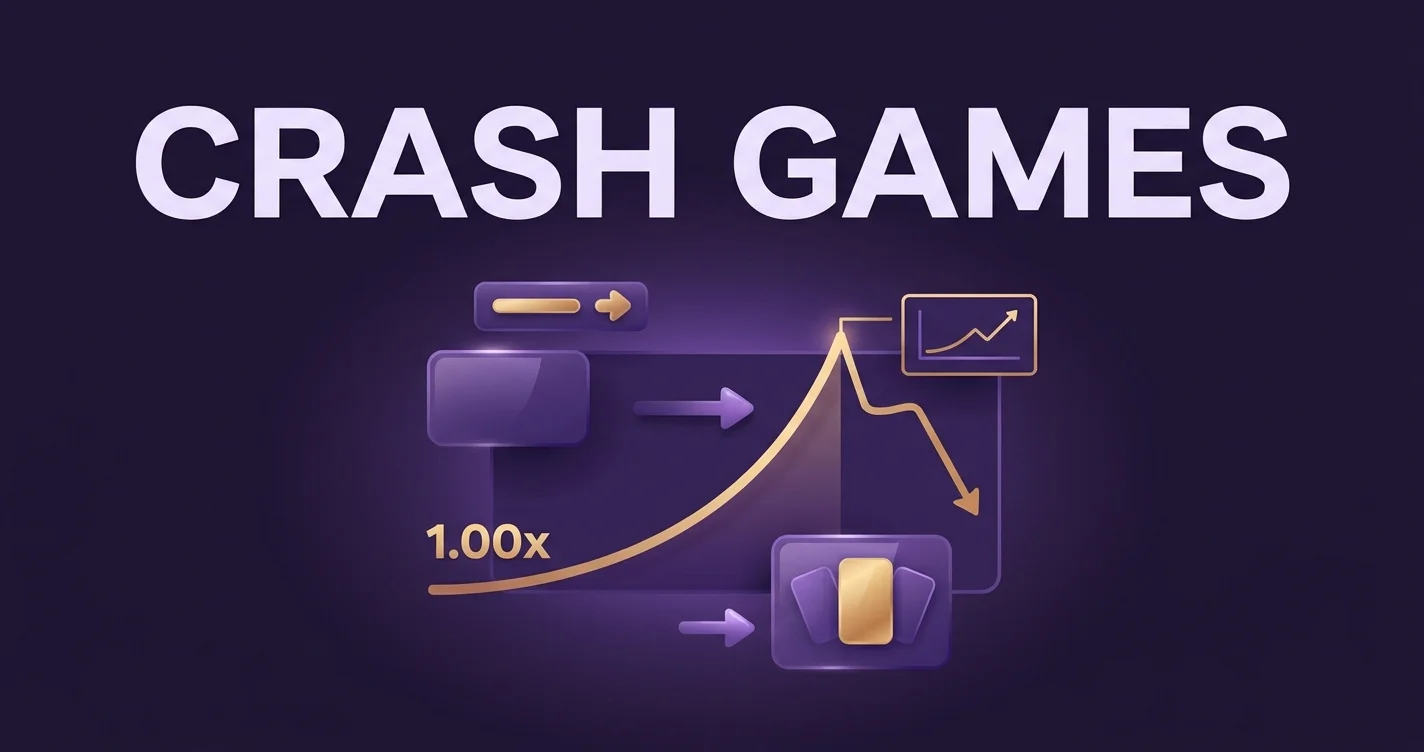
Crash games are fast rounds in which your bet multiplier climbs from 1.00x and "crashes" at a random moment. Your goal is to cash out before the crash: you then receive your stake multiplied by the current multiplier. If you don't make it in time, the stake is lost.
The rules are simple, but there is clear mathematics behind them. Below we look at how a round is structured, what the probabilities mean, why "strategies" don't change the casino's edge, and how to play without losing control.
How a Crash Game Round Works
A round almost always looks the same:
- You place a bet before the round starts. There are often a few seconds for accepting bets.
- The round starts and the multiplier grows: 1.10x, 1.50x, 2.00x and beyond. It is usually shown as a rising graph or an object flying upward.
- At any moment you can press "cash out" and lock in your win at the current multiplier.
- At a random moment the multiplier stops. Anyone who hasn't cashed out loses their stake.
Rounds are short, from a few seconds to half a minute. This is one of the reasons such games are so absorbing: decisions are made constantly, and the result is visible immediately.
Auto Cash-Out
In most crash games you can set a multiplier at which your bet is cashed out automatically, for example 2.00x. This is useful for two reasons. First, you don't depend on your reaction speed or internet lag. Second, you decide in advance when to exit and don't change your mind under the influence of emotions in the middle of a round.
Where the Crash Point Comes From
The crash moment is determined by an algorithm, not by players and not by a "streak of rounds". At its core is a random number generator (RNG). Each round is independent of the previous ones: the game doesn't remember how many times before the multiplier crashed early.
Many crash games use a provably fair scheme. In simplified terms, it works like this: before the round a cryptographic fingerprint (hash) of the result is published, and after the round you can verify that the result wasn't swapped. This doesn't make the game favorable to the player, but it confirms that the result wasn't changed along the way. Check the description of a specific game to see whether it offers such verification.
Probabilities and Multipliers: Simple Math
The most important thing to understand is that the higher the multiplier, the lower the probability of reaching it. In a typical crash game model, the probability of reaching multiplier m is roughly (1 minus the casino edge) divided by m. The exact figures depend on the game, so let's take a hypothetical edge of 4%, that is, an RTP of 96%, as an example.
| Target multiplier | Approximate probability of reaching it | Payout on a 100 UAH bet |
|---|---|---|
| 1.50x | 64% | 150 UAH |
| 2.00x | 48% | 200 UAH |
| 5.00x | 19.2% | 500 UAH |
| 10.00x | 9.6% | 1,000 UAH |
This is an illustration of the formula, not data about any specific game. Before playing, always check the rules and RTP information in the game itself.
A Worked Example
Suppose you bet 100 UAH each time and set an automatic cash-out at 2.00x every time.
- The round ended at 2.35x: you collected 200 UAH, a net win of 100 UAH.
- The round ended at 1.45x: the cash-out didn't trigger and you lost 100 UAH.
Now let's calculate "on average". If the chance of reaching 2.00x is 48%, then out of 100 rounds about 48 will be winners. You will wager 10,000 UAH and receive about 48 × 200 = 9,600 UAH. The 400 UAH difference is the house edge, 4% of the total amount wagered.
Now try another option: a target of 10.00x. About 9.6 rounds out of 100 win and pay 1,000 UAH each, for a total of about 9,600 UAH. The expected return is the same. Only the character of the game changes:
- a low target gives frequent small wins and a slow "drain" of the bankroll;
- a high target gives long losing streaks and rare big wins.
In other words, choosing a multiplier means choosing volatility, not a way to beat the game.
One More Nuance
In many crash games a share of rounds ends immediately at 1.00x, and cashing out is impossible. The casino edge is largely made up of such rounds. So don't assume that "you'll almost always make it to 1.10x".
Common Myths
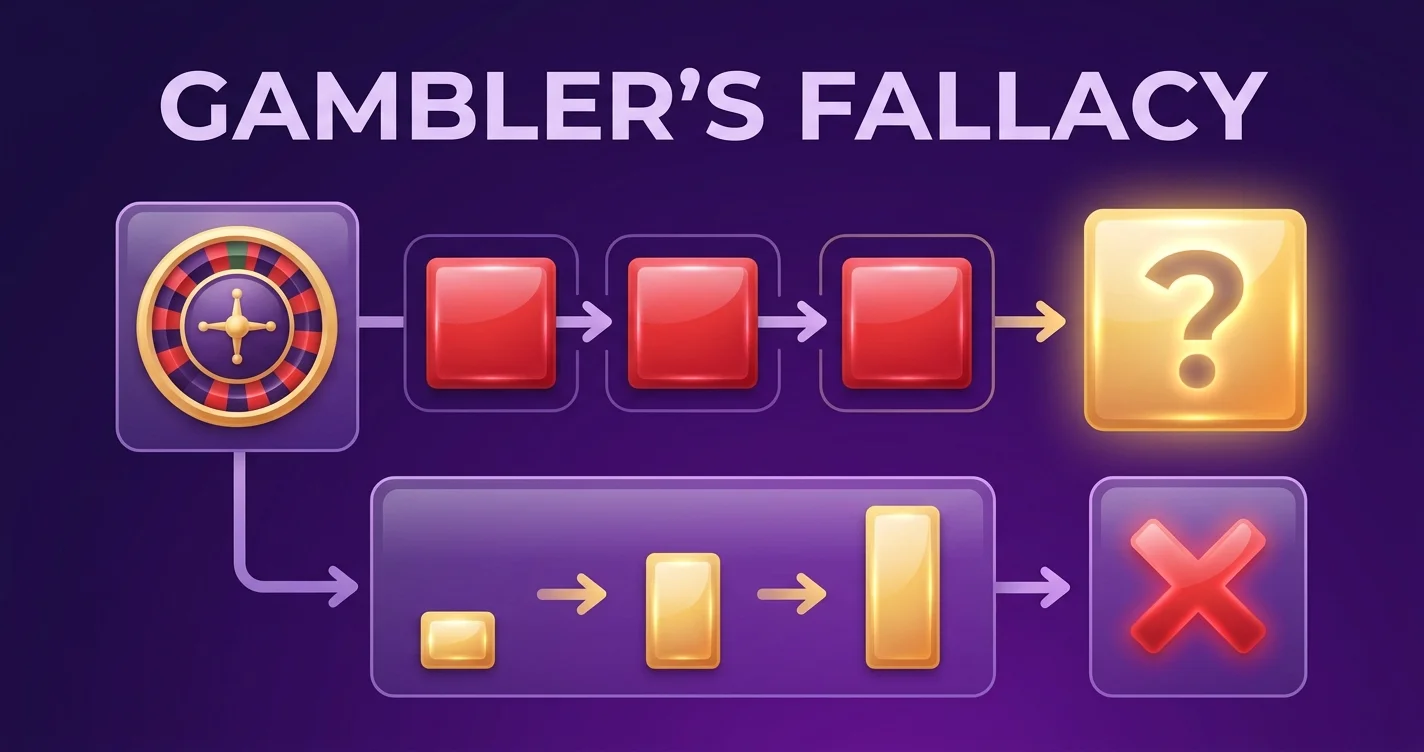
"After a series of low crashes, a high one is bound to come"
No. This is the faulty "debt" logic: rounds are independent. After ten early crashes, the probability of a big multiplier in the next round is the same as it was before.
"Round history shows a pattern"
History is only useful for seeing what the spread of results looks like. You cannot predict the next round from it. Random sequences always contain "patterns" that the brain is eager to notice.
"There are bots and signals that know when it will crash"
If the round result is determined by an RNG, nobody knows it in advance. Paid "signals", "predictors" and channels with guaranteed forecasts are a classic scam. Don't pay for them and don't give anyone access to your account.
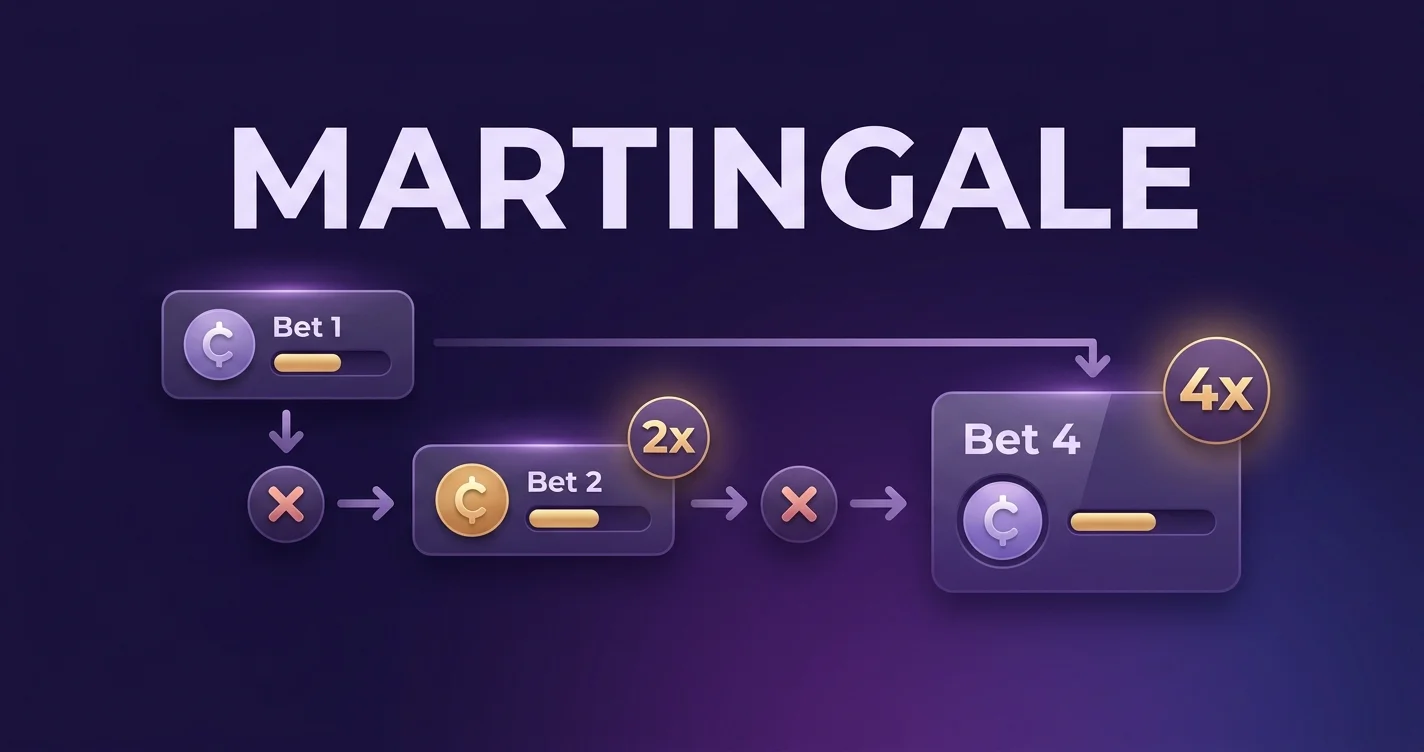
"Martingale guarantees a profit"
Martingale, that is, doubling your bet after a loss, supposedly "recovers" your losses with a single win. In practice, though, it runs into two limits: the maximum bet limit and your own balance. A series of seven or eight losses in a row at a low multiplier is not that rare, and over that time the stake grows hundreds of times over. The method gives no mathematical advantage, but it sharply increases the risk of losing your entire bankroll.
"Two bets at once reduce risk"
Some crash games let you place two bets per round, for example one at 1.5x and another at 10x. This changes the shape of the results, but the expected return stays the same. You are simply distributing the risk differently.
Typical Player Mistakes
- Playing without a predetermined target. "I'll wait a little longer" is the most common cause of losses. It is better to set an automatic cash-out.
- Raising the stake after a loss. The urge to "win it back" quickly eats up your balance.
- Relying on other people's screenshots of big multipliers. You only see the rare successful rounds, while nobody posts the thousands of losing ones.
- Not accounting for the speed of play. A round lasts a few seconds. In an hour of such bets, an enormous turnover builds up, and the casino edge applies to each of them.
- Ignoring bonus terms. Not all games count equally toward wagering. Before playing crash with bonus funds, check the bonus and wagering rules: sometimes such games count only partially or not at all.
How This Affects Your Choice
Crash games suit those who enjoy deciding the moment of exit themselves and like short rounds. But these same traits make them risky: the pace is high and the sense of control is deceptive. The decision of "when to cash out" doesn't change the mathematical expectation; it only changes the spread of results.
Practical tips:
- Set an amount for the session and don't top up your balance in the middle of play. Understanding your bankroll will help: a bet should be a small part of your budget, so that a losing streak doesn't end the session in a minute.
- Choose a multiplier to match your mood: if you want to play longer, go for low targets; if you're ready for long losing streaks in exchange for a big win, go for high ones.
- Use auto cash-out and fix your exit rule before the game begins.
- Set a time limit, not just a money limit. It's easy to lose track in fast games.
- Stop playing when you've reached your planned result or loss limit, not when it's "due to win back".
Responsible Gaming
Crash is not a way to make money, and no win is guaranteed. The most likely long-term result in any such game is a small loss that accumulates faster the more often you bet. The game is for adults only, 18+. If you feel your betting has gotten out of control, take a break. At Rich Top there is self-exclusion for a period from 6 months to 5 years, and questions about limits can be resolved through 24/7 support.
Pay attention to warning signs too: you bet more than you planned, you play to recoup a loss, or you hide your spending from loved ones. These are reasons to stop immediately and seek help.
Summary
- A crash game is a bet that the multiplier will reach your cash-out point rather than crash earlier.
- The result is determined by a random algorithm, and each round is independent.
- The expected return doesn't depend on the chosen multiplier: only the spread of wins and losses changes.
- Streaks, signals and progressions give no guaranteed advantage.
- Auto cash-out, small stakes and strict limits help you stay in control.
If you decide to play at RichTop, first review the rules of the specific game and the terms of active bonuses, then set your limit and stick to it.





 Google

 Payment History